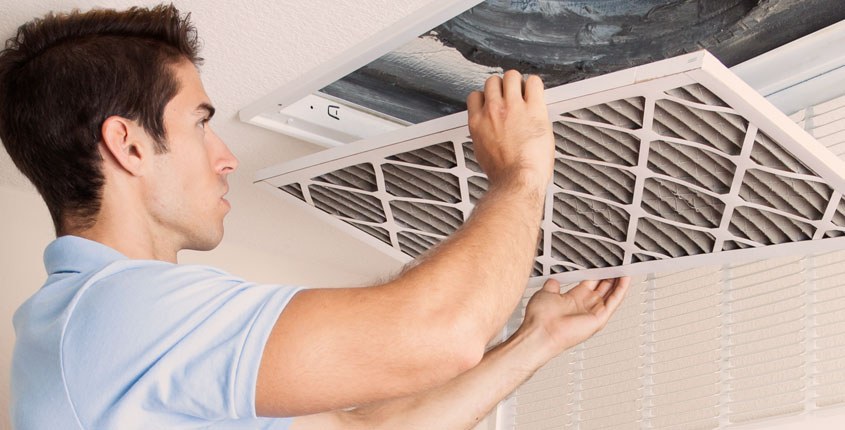
With the constantly rising cost of energy, it’s crucial for many homeowners to try save energy and maximize equipment efficiency. Especially since heating and cooling account for nearly half of your home’s energy use. The United States Department of Energy reports that a simple way to do this is to change the air filter. This easy fix doesn’t sacrifice your home comfort and it can improve the efficiency of your HVAC equipment by 5% to 15%. Now imagine that savings in dollars. If your average utility bills total $200 a month, that could mean a savings of $10-$30 a month and up to $360 a year!
Determining When to Change the Air Filter
Most people will change the air filter at the start of a new season. Some people, on the other hand, change it once a month – just to be on the safe side. What are the factors that determine how often you should change the filter?
What type of air filter do you have? Since each type has a different life span, use that to help determine how often to change the air filter.
What is the air quality like in the house? If the air does not seem as clear or fresh as it used to, or you are having issues with allergies or frequent colds, you may need to replace your filter more often or choose a different type.
Are there pets in the house? If you have pets in the home, you may want to consider changing filters more frequently or choosing a type that helps with pet dander.
How many people are in the home? The more people in the home, the more dust and dirt flies around – consider changing your filters more often.
Are you in an area with high construction or pollution? If the answer is yes to either of these, check your filters frequently and make sure to change them when they are dirty.
How Often Should Filters Be Changed?
Keeping all the above factors in mind, your filters should basically be changed when they are dirty. While this may seem like generic advice, it all depends on the living condition in your home, the type of filters used, and how often and how hard your HVAC equipment is used. In unusually hot summers or cold winters, the filters are going to need checking more often. A good rule of thumb is check them once a month.
Which is the Right Type of Air Filter for Me?
With the many advances in technology, homeowners have a lot more choices in energy-efficient equipment and accessories. Even something as simple as air filters come in many varieties. Here are the some of the types of air filters you may be able to use for your HVAC equipment.Which is the Right Type of Air Filter for Me?
Economy panel filters These come in a pack of four or five and are relatively inexpensive. The downside is that you get what you pay for. These filters simply do not filter much at all and you will probably be replacing them once a month as well.
Pleated filters Pleated filters, which can last from three to six months, are from 10% to 60% more efficient than conventional AC filters.
Electrostatic filters These are both energy-efficient and cost-effective. They may cost a little more but can typically be washed and reused.
Electronic filters These filters can get dirty quickly, but it typically does not negatively impact airflow. To clean them, you remove the cells, soak them in cleaner, rinse and reuse.
HEPA filters Although HEPA filters are the most efficient, you will likely pay a premium for these filters.
评论
发表评论